
What we learned from NORDEEP: Six lessons about deep tech talent in 2026
Written by Vivi Brooke, Head of Employer Branding & Brand Marketing.
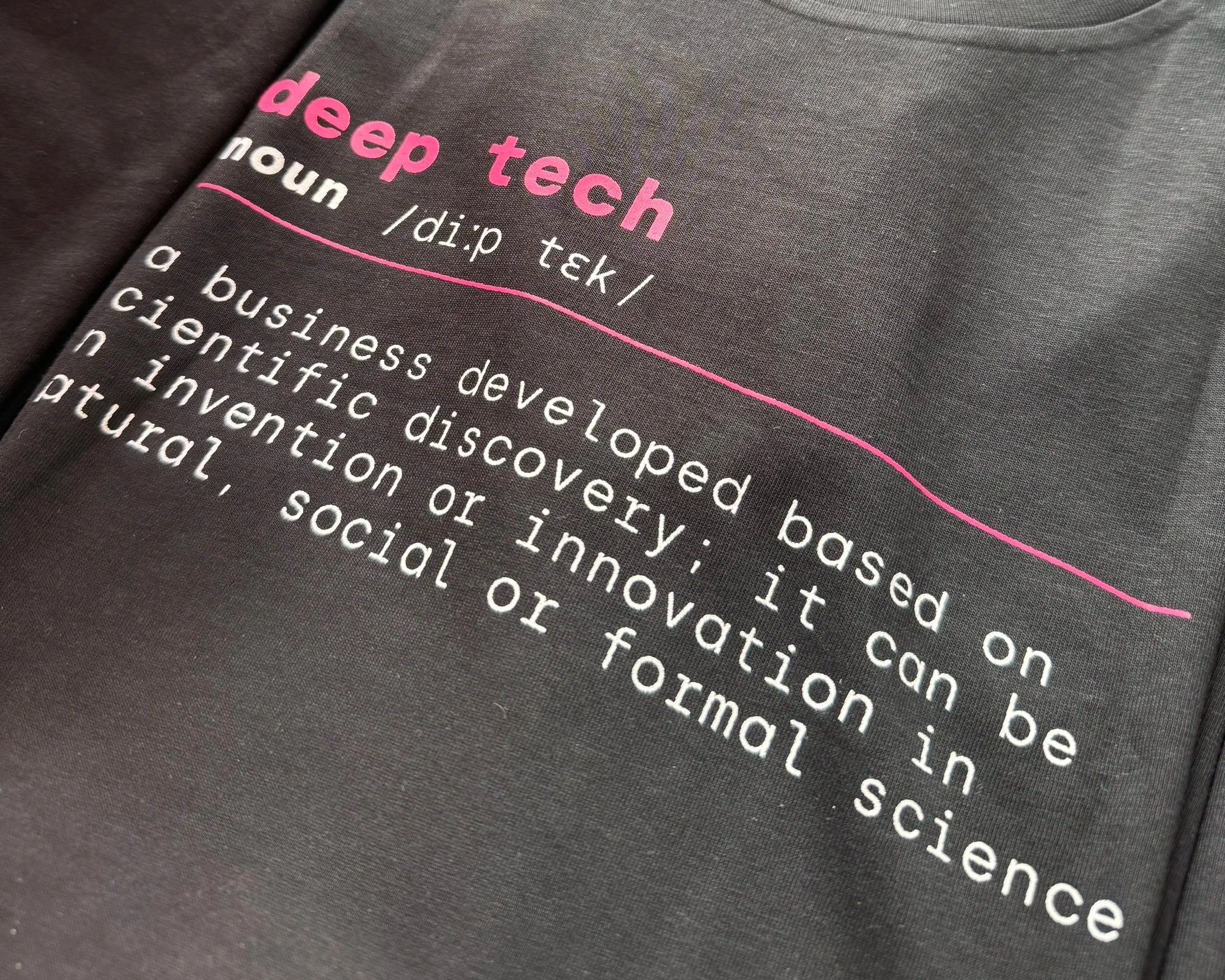
Learnings from the Nordic Deep Tech Business Summit, 16–17 September 2026.
The tech will hook us. The team will make or break it.
That was our first takeaway from the Nordic Deep Tech Business Summit. Two days of conversations about investment, life sciences and research spinouts kept circling back to people.
Who understands the customer? Who can turn a scientific breakthrough into a product? How do you convince an experienced specialist to join a company with years of development ahead? And how do you support the people carrying that responsibility?
For Finland's deep tech ecosystem, these are practical questions about turning scientific strengths into companies that grow, and into solutions that improve people's lives.
For us at Finders Seekers, they're talent questions. Here are six we're taking back to our work with founders and growing teams.
1. Commercialisation starts with the customer, and someone has to own it
Speakers kept returning to one question: who needs what you're building?
Antti Vasara talked about explaining the problem a technology solves and the market it serves. The life sciences discussion showed how much work can sit behind finding the customer. The patient who benefits, the professional who uses the product and the organisation that pays for it may all be different people.
That changes hiring. "We need a commercial person" is a starting point, but it leaves most questions open. Do you need someone who understands clinical workflows? Someone who can land industrial pilots, build partnerships, or set up a repeatable sales process?
Those are different jobs.
The talent implication: Define the next commercial milestone before you define the role. The clearer you are about what someone needs to achieve, the better your chances of finding the right experience.
Founders still need to stay close to customer discovery. A commercial hire should strengthen that understanding. It shouldn't replace it.
2. A complementary team needs room for different expertise
Investors talked a lot about the team behind the technology. Coachability came up too. Can founders listen, take on a different perspective and adapt?
A commercial hire only helps if they can influence decisions. The same goes for a specialist in product development, manufacturing or any other area the company needs to grow into.
That takes an honest conversation about responsibilities. What does the founder keep? Where does the new person have authority? How will the team handle disagreement?
The life sciences panel also challenged the idea that every researcher should follow the same entrepreneurial path. Some love building a company and learning the commercial side. Others want to stay close to the science. Both contribute.
The talent implication: Build around the strengths and ambitions of the people you have. When you assess candidates, look at how they think together, challenge assumptions and share responsibility, as well as at their credentials.
A complementary team works when its members can actually use their differences.
3. Tie the right hire to a milestone, not just a funding round
One challenge from the spinout discussion was finding the right people to scale at the right time. Experienced specialists are expensive, hard to find and hard to convince.
Meanwhile, science doesn't run on a schedule. Research, product development and customer learning often move forward at the same time.
That's why copying another startup's hiring plan rarely works.
A company preparing a pilot needs a different profile from one preparing production. A business with early customer interest may need to understand how buying decisions get made before it builds a sales team.
The talent implication: Connect every planned hire to a clear milestone and a capability gap. Decide what has to sit permanently in the team, and where an adviser, board member or specialist partner can fill in.
If you're considering a talent partner, ask yourself two things. Do we know what this person needs to achieve? And do we have the capacity and expertise to find them?
You might reach that point at seed, Series A or later. The funding label doesn't tell you on its own.
4. Candidates need to see the difference they could make
Deep tech founders get good at explaining why their technology matters to customers and investors. NORDEEP got us asking how well that story lands with candidates.
A candidate is making a personal commitment. They may be leaving an established organisation, moving countries, or joining a small team with a lot of uncertainty ahead. They need to understand what they'd be joining, and what their work could help make possible.
What problem are you solving? Who benefits? What have you already proven? What's still uncertain? Where would this person's expertise make the difference?
This is where employer branding gets concrete. It's about making a complex opportunity understandable, and being honest about the work and its potential impact.
The talent implication: Build the story around the candidate's contribution. Connect the problems they'll solve and the decisions they'll shape to what could improve for a patient, a clinician, a customer or society.
Take an engineer working on breath-analysis technology. Their work could help create a gentler way to detect illness in premature babies. That gives the technical challenge a human context. Be clear about what's possible today, where the company is heading, and how this person helps it get there.
At Finders Seekers, this is where talent attraction and recruitment meet. A clear role and a credible employer story are what make the right people want to take a closer look.
5. Deep tech talent needs vary across the ecosystem
"Deep tech talent" covers a lot of ground.
Quantum computing, space technology, industrial sensing and life sciences share some challenges. But the experience it takes to move each of them forward can be very different.
Finland makes that breadth easy to see. IQM Quantum Computers, ICEYE and VAISALA represent different technologies, growth stages and working environments. Each one's hiring challenge depends on what the team is trying to achieve next.
The healthtech and life sciences companies at NORDEEP inspired us most. We've worked with healthtech companies whose solutions directly affect people's lives, and that link between scientific progress, the people behind it and its impact matters a lot to us.
A few companies that caught our attention:
LifeGlue Technologies, the company behind Glue4Life, develops materials that help living cells survive and grow in 3D-bioprinted tissue for research, with ambitions for future clinical use.
Medlyse is developing breath-analysis technology that could help detect signs of illness in premature babies and reduce the need for repeated blood sampling.
VitalSigns brings multiple measurements into one connected device to make physical examinations and documentation easier.
MultivisionDx is working towards diagnostic tests that use insights from tumour tissue to help inform cancer treatment decisions.
They're at different stages, but their ambitions make the impact tangible: gentler examinations, better information for clinicians, and new possibilities for research and care.
For a candidate, the application matters, and so does the stage. Someone drawn to exploratory research may want a very different role from someone motivated by industrialisation or customer deployment.
The talent implication: Spell out the mix of domain expertise, development stage and working environment a role needs. Connect it to the outcome the team is working towards. And look beyond familiar job titles when you think about where relevant experience could come from.
6. The team has to be able to sustain the journey
Some of the most memorable NORDEEP conversations were about the human side of building a company.
Moving from research into a startup can mean leaving a community and an infrastructure behind. Founders can suddenly be responsible for funding, customers, hiring and leadership, on top of the technology.
The panels talked about how boards and investors can support founders through that shift, and about how long deep tech journeys can be.
For us, this adds something important to team building. Complementary expertise spreads the load, but only when people have trust, clear roles and room to raise concerns.
The talent implication: Think about what a hire changes for the existing team. Will they reduce a critical dependency on one founder? Bring experience of the next stage? Take ownership of work that currently has no clear owner?
Building a team also means creating the conditions for people to contribute over time. The ambition may be a decade in the making, and the people behind it need support along the way.
Finland's deep tech opportunity is a talent opportunity
NORDEEP brought researchers, founders, investors and industry together around one challenge: turning science into businesses.
Talent partners have a practical role in that. Once a company knows the capabilities it needs, it still has to find, attract and hire the people who bring them. Then it has to create an environment where they can do their best work.
That's where we come in. We help scaling deep tech companies build teams with the expertise their next stage demands, and make the opportunity clear to the people they want to reach.
NORDEEP reminded us how tightly customer understanding, team composition and talent attraction are linked. Understanding the problem defines the role. A meaningful role attracts the right people. And their expertise moves the company towards the impact it wants to make.
Scaling deep tech and need the people to match? Talk to us.